8 Week Four - Sport and the Media
8.1 Introduction
Sport and media have a symbiotic relationship, evolving together over time. Initially dominated by print, sports coverage expanded with radio, TV, and now, digital platforms, allowing fans and athletes direct engagement with each other.
‘Symbiotic’ means they ‘feed off’ of each other. Each influences the other.
‘Media framing’ shapes our perception of sport, leading to the commodification of events for commercial appeal. While the media can perpetuate stereotypes, especially concerning gender and race, it can also challenge them, influencing societal change.
Ultimately, the media doesn’t just broadcast sporting events; it defines their societal reality.
This week, we’ll examine this relationship between sport and the media, with an emphasis on its evolution, commercialisation, representation, and impact on fandom.
Takeaway
The media exert a significant influence on sport, not always positive.
Key Questions
By the end of this week’s lecture, you should be able to answer the following questions:
How did sports media evolve?
How has sport become commercialised?
How does the media ‘present’ sport?
What impact does the media have on sport?
Themes
This week’s lecture is organised around four themes:
- The Evolution of Sport Media
- Making Money from Sport
- ‘Media Narratives’ in Sport
- The Impact of Sports Media
Concepts
Within these four themes, we’ll encounter the following concepts:
Theories
We’ll also learn about the following theories:
8.2 Discussion Questions
In small groups, select one of the following questions and use it as a starting point for a discussion of today’s material. There are some suggestions for things you might talk about.
- Reflect on how the evolution of radio and television changed the way fans experience sports. How do you think these media innovations shaped not only the viewing experience but also the emotional connections fans developed with teams and athletes? Provide examples from current media practices to support your thoughts.
- Consider the impact of social media on the relationship between athletes and their audience. How has this shift changed the traditional media landscape, and what are the potential advantages and challenges for athletes in controlling their public image?
- Reflect on the commodification of athletes in today’s media-driven sports environment. How do you think this affects an athlete’s sense of identity and performance, both positively and negatively? Discuss whether this commodification dehumanizes athletes or offers them new opportunities.
- Examine the ethical responsibilities of sports media in shaping public narratives around gender, race, and disability. How should media coverage adapt to provide fairer, more balanced representations of athletes, and what are the risks of perpetuating harmful stereotypes through biased media framing?
8.3 Reading
All reading for the module can be accessed via the module reading list on myplace.
Preparatory Reading
You should read the following paper before this week’s lecture:
- Dart, J. (2014). New Media, Professional Sport and Political Economy. Journal of Sport and Social Issues, 38(6), 528-547.
Further Reading
You should read the following paper after this week’s lecture:
- Filo, K., Lock, D., & Karg, A.(2015). Sport and social media research: A review. Sport Management Review, 18:2,166-181.
8.4 Lecture Outline
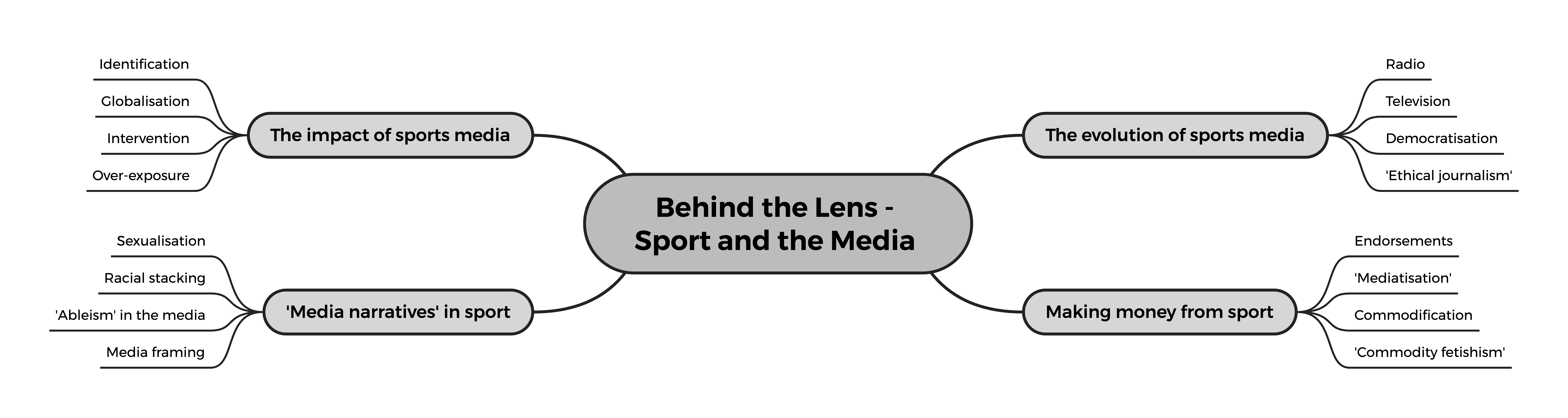
Today’s lecture is structured as follows:
Topic 1: The Evolution of Sports Media
The relationship between sport and the media has transformed over the decades, reshaping how audiences engage with athletic events.
Radio
How did radio broadcasts change the way people consumed sports and foster a sense of national identity?
Radio broadcasts transformed sports consumption by allowing people to experience live events simultaneously, creating a shared experience.
Sports became more accessible to those unable to attend in person, democratizing the viewing experience.
Broadcasters developed storytelling techniques to heighten engagement and emotional investment in teams and athletes.
Radio’s legacy persists today in live commentary, where the focus on real-time narrative continues to captivate listeners.
Television
What role did television play in deepening audience engagement and uniting global sports fans?
Television revolutionised sports by introducing visual elements, bringing fans closer to the action than ever before.
Technological advancements like slow-motion replays and multiple camera angles deepened audience engagement.
Sporting events became prime-time spectacles, solidifying the relationship between media and the global sports industry.
Television turned local sports into global phenomena, uniting fans worldwide.
Democratisation
Has the rise of social media shifted the relationship between athletes, media, and the public, giving more voices a platform?
Social media has empowered both athletes and fans, allowing them to bypass traditional media channels for direct communication.
Platforms like Twitter and Instagram serve as public spaces for sports discourse, significantly altering athlete-audience dynamics.
Fans now participate in content creation, changing how sports media is consumed and shared.
This shift allows more intimate, unfiltered connections between athletes and fans but blurs the line between news and opinion.
‘Ethical Journalism’
How has digital media’s rapid spread of information impacted the standards of ethical sports journalism?
Digital media’s speed can lead to unverified or sensationalized reporting, challenging ethical standards in journalism.
Ethical journalism in sports must balance the need for speed with accuracy and fairness in reporting.
Social media often drives sports narratives before formal media outlets have a chance to verify facts.
Ethical challenges arise as journalists navigate fake news, trolling, and the amplification of controversy in the digital age.
Topic 2: Making Money from Sport
Sport is not just about athletic achievement but has become a major financial engine, driven by endorsements, media deals, and commodification.
Endorsements
How do athlete endorsements create a mutually beneficial relationship between brands and sports stars?
Athlete endorsements provide significant income, often surpassing their earnings from the sport itself.
Brands associate with athletes who embody success and dedication, enhancing their public image.
Media amplifies endorsements through targeted advertising and strategic partnerships.
Endorsements build an athlete’s personal brand, extending their influence beyond their sports career.
‘Mediatisation’
How does media exposure shape an athlete’s public image and their influence beyond the field?
Media coverage increases an athlete’s visibility, helping craft a public persona beyond their performance.
Athletes use platforms like social media to shape their own image and maintain control over how they are perceived.
Media can turn athletes into cultural icons with influence that extends into politics, business, and activism.
Athletes’ fame often outlasts their careers, but media scrutiny follows them closely.
Commodification
In what ways are athletes commodified, and what ethical concerns does this raise?
Athletes are marketed as commodities, with their performance and personality being monetized by teams and sponsors.
Commodification raises ethical concerns such as exploitation, loss of privacy, and pressure to perform.
Media contributes to commodifying athletes, focusing on their commercial value over their human qualities.
While financially rewarding, commodification can disconnect athletes from the intrinsic love of their sport.
‘Commodity Fetishism’
How does the concept of commodity fetishism reveal the dehumanization of athletes in the media?
In sports media, athletes are often treated as objects of entertainment rather than individuals with personal stories.
Media narratives glorify athletic achievements while ignoring athletes’ emotional and psychological well-being.
The focus on commodification can lead to dehumanization, where athletes are valued only for their performance.
Shifting the media’s focus to athletes’ humanity requires prioritizing their well-being over commercial interests.
Topic 3: Media Narratives in Sport
Sports media not only reports on events but also creates powerful narratives that shape public perception
Sexualisation
How has the sexualisation of athletes, particularly women, evolved, and what impact does it have on their authentic representation?
Female athletes have often been sexualised in media, where appearance is emphasised over athletic skill.
The “Male Gaze” theory explains how women are objectified, trivializing their achievements in sports.
Sexualization diminishes female athletes’ credibility and distorts public perceptions of their professionalism.
Authentic media representation should focus on skill and achievement rather than appearance.
Racial Stacking
How do racial stereotypes influence the structure and roles assigned to athletes within sports?
Racial stereotypes often dictate which positions or roles athletes of certain races are given in sports.
These stereotypes perpetuate ideas about physical and intellectual abilities based on race.
Structural dynamics in sport reinforce these biases, limiting opportunities for minority athletes in certain roles.
Challenging racial stacking requires creating inclusive environments in sport.
‘Ableism’ in the Media
What are the consequences of media-driven ableism, and how does it shape perceptions of athletes with disabilities?
Media often focuses on athletes’ disabilities rather than their achievements, reinforcing ableist narratives.
Coverage tends to sensationalize or sentimentalize disabled athletes instead of recognizing them as equal competitors.
This misrepresentation can perpetuate societal biases and reinforce stereotypes.
Reframing narratives to focus on skill and dedication helps combat ableism in sports media.
Media Framing
How does media framing of athletes shape their public identity and influence societal attitudes?
Media framing shapes how athletes are perceived by the public, affecting their reputations and careers.
Positive or negative media framing can influence sponsorship opportunities and an athlete’s legacy.
Media framing often reflects societal biases, reinforcing stereotypes about gender, race, or class.
Ethical media framing requires balanced, fair representation that avoids perpetuating harmful stereotypes.
Topic 4: The Impact of Sports Media
The influence of sports media goes beyond just entertainment; it plays a significant role in shaping identities, building communities, and globalizing fandom.
Identification
How does sports media foster community and influence personal and social identities?
Sports media fosters identification among fans, who often view their favorite teams as extensions of themselves.
Social Identity Theory explains how group affiliation, like supporting a team, shapes personal identity.
Media reinforces this group identity, creating shared experiences and emotional bonds among fans.
Identification with teams or athletes influences social behavior and community dynamics.
Globalisation
In what ways has media facilitated the emergence of global sports communities and transformed fandom?
Global sports media turns local events into global spectacles, uniting fans across countries and cultures.
Social media and streaming platforms allow fans to engage with athletes and teams in real-time, transcending geographical boundaries.
The “Global Village” concept highlights how media has shrunk the world, enabling global sports conversations.
This global reach has created international sports communities that share a collective identity.
Intervention
What transformative role does sports media play in shaping emotional connections and societal narratives?
Sports media doesn’t just report on events but shapes how they are understood and remembered.
The “Media Spectacle” refers to how sporting events are portrayed as grand, emotional experiences.
Media elevates athletes to hero status but also amplifies scandals, creating a paradoxical impact.
Media intervention can inspire, but it can also distort, shaping public perceptions in complex ways.
Over-exposure
What are the consequences of media saturation in sport, and how does it affect the viewing experience?
Continuous coverage of sports can overwhelm audiences, leading to media fatigue.
The ‘buffet’ experience of media consumption allows for endless content, but it also diminishes the uniqueness of events.
Over-exposure can dilute emotional connections and make it harder for individual athletes to stand out.
However, media saturation also offers opportunities for more inclusive, diverse coverage.